
Conservation Research and Action at Jahoo
Conservation Research and Action at Jahoo

Jahoo is a community-based ecotourism and conservation initiative located in Keo Seima Wildlife Sanctuary, Mondulkiri, Cambodia. Beyond wildlife tourism, Jahoo plays a central role in conservation research, supporting one of the most significant long-term behavioral ecology studies of Southern Yellow-cheeked Crested Gibbon.
Through collaboration with conservation scientists and the Indigenous Bunong community, Jahoo integrates research, habitat protection, and sustainable livelihoods into a single, long-term conservation model.

Gibbon habituation: A Foundation for Research and Conservation
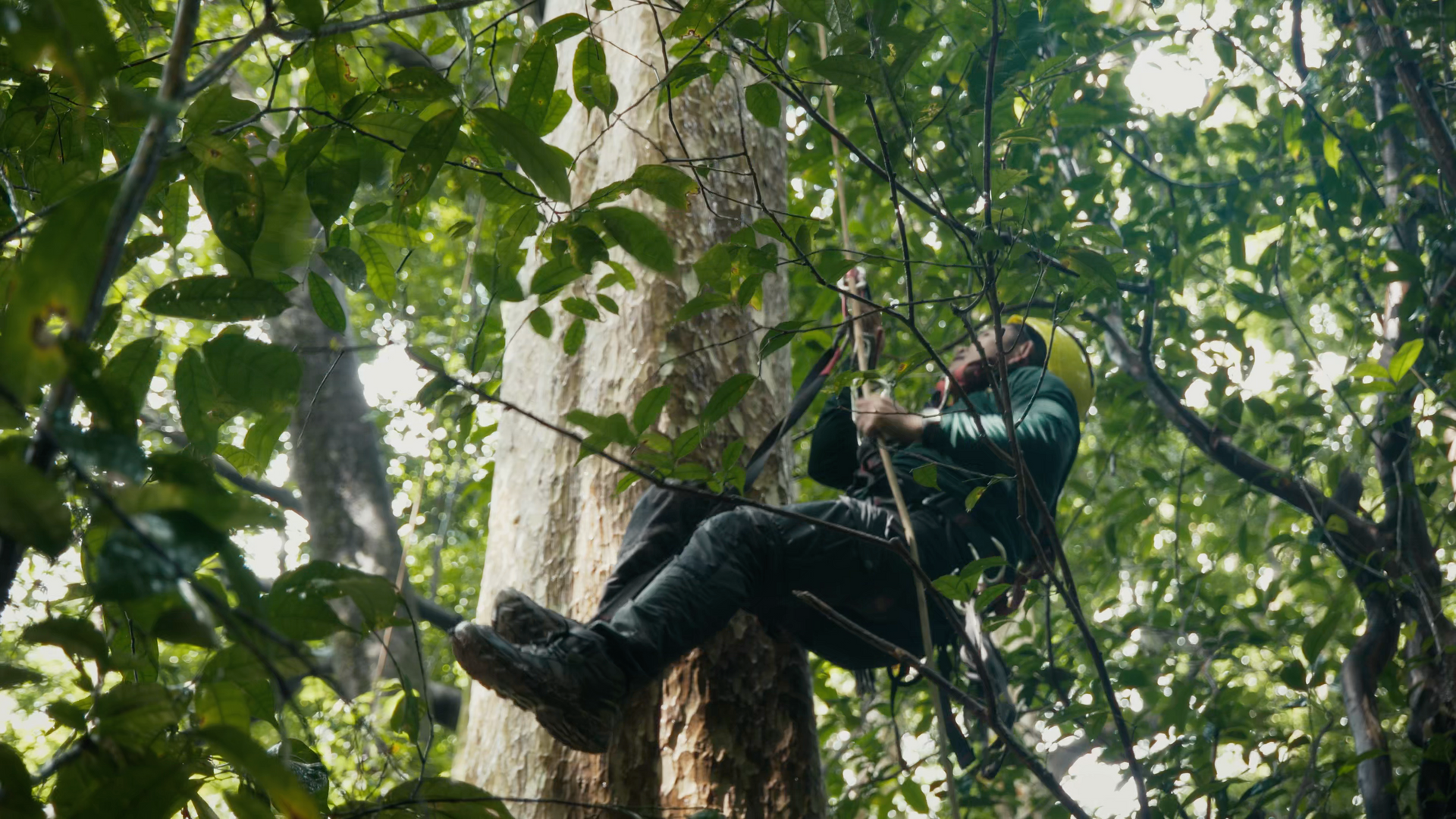
Jahoo applies a carefully designed habituation methods for Southern Yellow-cheeked Crested Gibbons, developed initially to support low-impact wildlife tourism and to enable behavioural ecology research.
These habituation protocols follow the
IUCN Species Survival Commission (SSC) Best Practices Guidelines for the Habituation of Great Apes for Research, Tourism and
Conservation, and for Watching Primates,
and are supported by conservation experts from the
Wildlife Conservation Society Cambodia. Habituation is a carefully managed, non-invasive process through which that allows gibbons to gradually tolerate accept the presence of human observers, achieved through consistent, neutral encounters with the same gibbon families over time, without altering changes altering to their natural behaviour.Habituation itself is not research, but a
methodological prerequisite that allows safe and reliable observation of gibbons in dense tropical forests, where direct study would otherwise be extremely limited.
Why Building a Long-Term Gibbon Research Program Matters
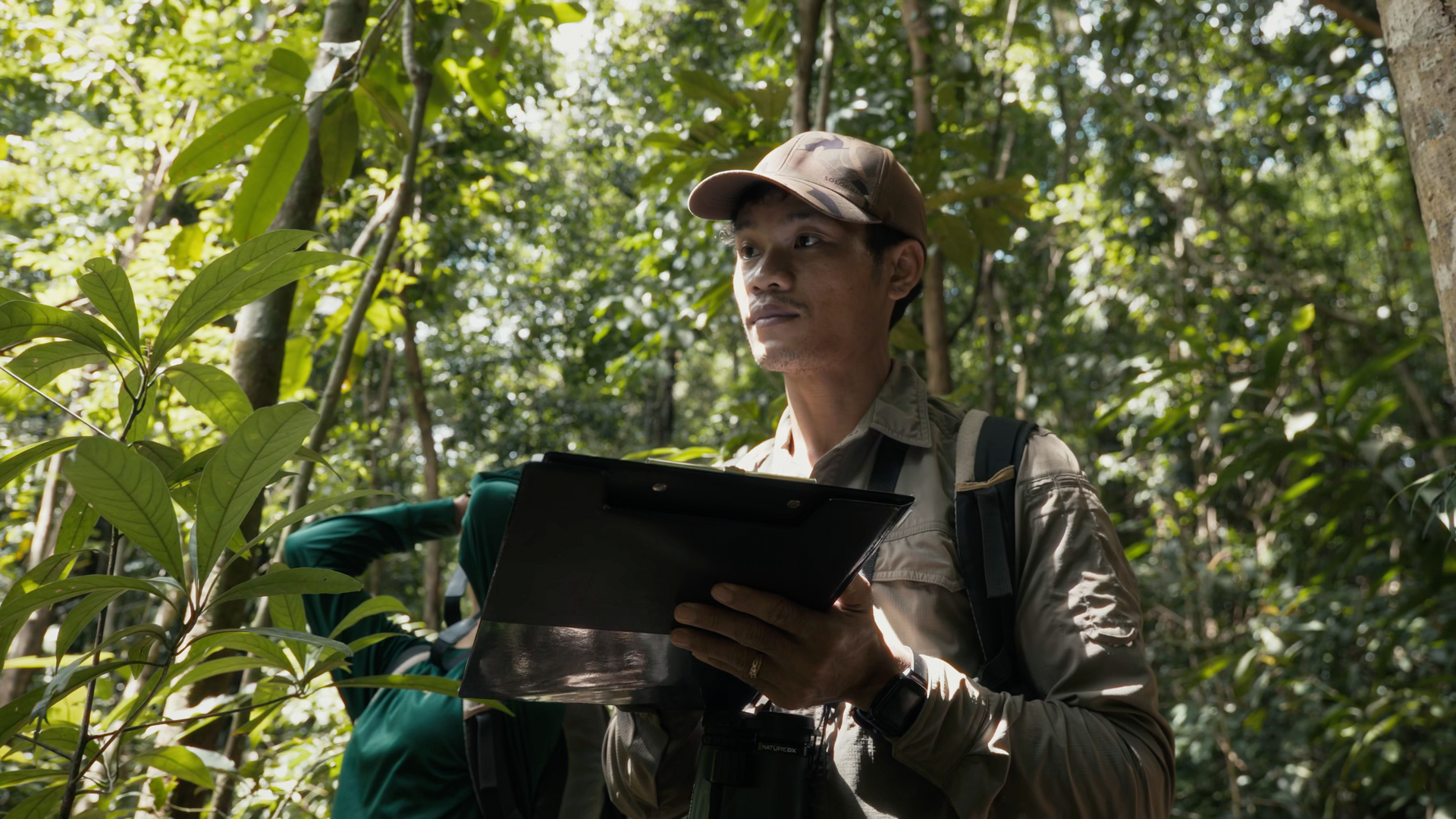
Gibbons are among the least understood apes, despite sharing approximately 96% of their genome with humans. Their arboreal lifestyle and large territories make them extremely difficult to study. Once habituated, gibbons can be studied in detail all day long, allowing researchers to conduct rigorous observations and generate robust long-term datasets.
Jahoo aims to develop a long-term research program focused on the behavioural ecology of Southern Yellow-cheeked Crested Gibbons. Current and future research focuses on:
- Family structure and territory use
- Feeding ecology and seed dispersal roles
- Responses to environmental variability and habitat change
By embedding these studies within a long-term research framework, Jahoo contributes directly to gibbon conservation strategies across Southeast Asia, strengthens evidence-based management decisions, and supports broader policy and habitat protection efforts.
Beyond Gibbons: Biodiversity Monitoring at Jahoo
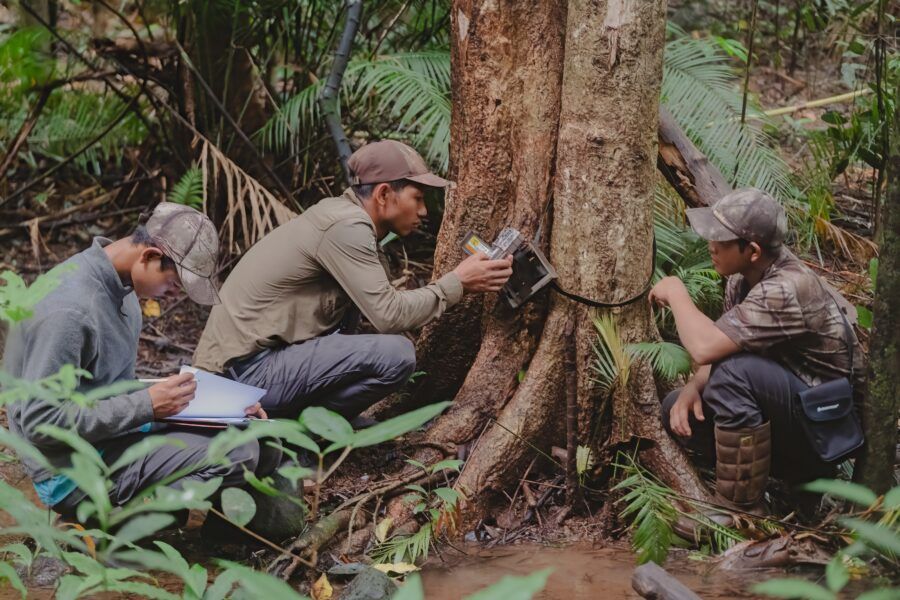
In addition to gibbon research, Jahoo conducts long-term biodiversity monitoring to assess overall ecosystem health. These surveys focus on key indicator species and habitats that reflect the condition of the forest.
Research Activities Include
Mammal surveys
Bird surveys
Butterfly surveys
Camera trapping network
These programs record species presence, habitat use, and population trends over time, helping conservationists identify priority areas for protection and management within Keo Seima Wildlife Sanctuary.
Forest Ecology Research: Understanding the Habitat
Understanding the forest itself is crucial for better understanding wildlife. At Jahoo, forest ecology research involves monthly monitoring of more than 1,200 individual trees across the site, representing over 100 species.
Researchers track fruiting patterns, productivity and seasonal availability over time , linking forest dynamics directly to animal behaviour and food resources. This long-term dataset is essential for understanding ecosystem health and for predicting how climate change and human activity may impact wildlife populations in the future.
Community-Led Conservation and the Gibbon Fund
Conservation at Jahoo is inseparable from community leadership. Tour fees directly support the Gibbon Fund, a community-managed fund established in 2017. Each visitor contributes USD 30, with decisions on spending made by elected Indigenous Bunong leaders.
The Gibbon Fund supports:
- Community-led forest patrols and snare removal
- Education for Bunong students
- Cultural events and ceremonies
- Indigenous land protection initiatives
- Elderly support
More than
90% of ecotourism revenue is spent within the local community, reinforcing conservation as a viable and sustainable livelihood.
These contributions allow the positive ripple effect of our ecotourism activities to be felt throughout the community.
Every visit directly contributes to the livelihoods of the indigenous community, and the forest itself.
Research, Ecotourism, and Alternative Livelihoods
By combining conservation research with ecotourism, Jahoo provides wildlife-friendly employment for Bunong youth. These roles offer alternatives to illegal logging or hunting, activities that have historically posed serious threats to the forest.
Through guiding, research assistance, monitoring, and patrol work, conservation becomes both economically and culturally relevant, strengthening long-term protection of the landscape.
A Model for Long-Term Conservation
Jahoo demonstrates how scientific research, Indigenous leadership, and responsible tourism can work together. Conservation research informs protection strategies, ecotourism funds community development, and local stewardship ensures that forests remain intact.
This integrated approach has positioned Jahoo as one of Southeast Asia’s leading examples of community-based ecotourism supporting conservation action, with outcomes that benefit wildlife, people, and ecosystems alike.
Conservation at Jahoo goes far beyond wildlife viewing. Through long-term gibbon research, biodiversity monitoring, and community-led action, Jahoo contributes to the protection of one of Cambodia’s most important forest ecosystems.
By visiting Jahoo, guests support not only unforgettable wildlife experiences, but also the research and conservation actions that help ensure gibbons and the forest they depend on continue to thrive.


